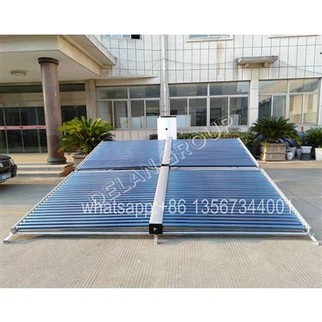
After working on solar thermal design, installation, and system upgrade projects for over a decade, I find that many homeowners, property managers, and commercial contractors still hold a vague understanding of solar heater systems. Most people simply think it is a device that "heats water with sunlight", but in actual engineering practice, a qualified solar heater system is a complete energy-saving solution that combines collection, heat exchange, storage, and intelligent control.
Many failed or low-efficiency solar projects I've rectified over the years stem from wrong system selection and mismatched design, rather than poor product quality. To help users avoid blind investment and configuration errors, I will explain exactly what a solar heater system is, classify its core types, break down its practical working principle, and share real application scenarios for residential, commercial, and industrial use - all based on on-site project experience from the technical team at DELAN Technology Co., Ltd..
What Is a Solar Heater System?
A solar heater system is a renewable energy thermal system that converts solar radiation into usable heat energy to heat domestic or industrial water, replacing traditional electric, gas, or oil heating equipment. Unlike single water heaters, a complete solar heating system includes core components such as solar thermal collectors, hot water storage tanks, circulating pipelines, control modules, and auxiliary heating devices.
Its biggest advantage is utilizing free solar energy to cut long-term utility bills, reduce carbon emissions, and deliver stable hot water supply all year round. When designed and installed properly, a standard solar heater system can last 15 to 20 years with minimal routine maintenance, making it one of the most cost-effective renewable energy upgrades for buildings.
Main Types of Solar Heater Systems
In actual project design, we do not classify solar heaters by appearance but by circulation mode and working logic. The two core categories are passive solar heater systems and active solar heater systems. Each type has clear applicable scenarios, advantages, and limitations.
1. Passive Solar Heater System
Also known as a natural circulation solar system, this type relies entirely on water temperature difference to complete internal circulation, with no water pumps or electric drive components. The collector absorbs solar heat, raises the water temperature, and the hot water naturally rises into the storage tank, while cold water sinks into the collector for continuous heating.
From years of field experience, passive solar water heaters feature simple structures, low failure rates, and zero daily power consumption. They are ideal for small households, villas, and low-budget renovation projects. However, their weakness is obvious: poor performance in low-temperature, rainy, or cloudy weather, and limited heating capacity for large water demand.
2. Active Solar Heater System
An active solar heater system adopts electric circulating pumps and intelligent controllers to force water circulation between collectors and hot water storage tanks. It does not rely on natural temperature difference, so the circulation speed and heating efficiency are controllable and stable.
This system supports timed heating, constant temperature control, and automatic solar hot water auxiliary heating linkage. It works stably in winter, overcast days, and high-altitude low-temperature environments. For commercial projects such as hotels, schools, factories, and apartment buildings, active solar hot water systems are always our first recommendation due to their stable continuous water supply and expandable system capacity.
Other Common Classifications
According to collector types, solar heater systems are also divided into vacuum tube solar heaters and flat-plate solar heaters. Vacuum tube systems have better thermal insulation and low-temperature resistance, suitable for temperate and cold regions. Flat-plate systems feature simple appearance, strong pressure resistance, and better adaptability for high-temperature and humid coastal environments.
How Does a Solar Heater System Work? Complete Working Principle
Many online articles simplify the working principle to "sun heats tubes", which is inaccurate. The complete working process of a standard solar heating system includes four core stages: energy collection, heat exchange, heat storage, and constant temperature supply.
Step 1: Solar Energy Collection
Solar thermal collectors installed on rooftops or open platforms absorb solar radiation energy and convert light energy into heat energy, rapidly raising the temperature of the circulating water inside the tubes or plates.
Step 2: Water Circulation & Heat Exchange
For passive systems: hot water with lower density rises naturally into the water tank, and cold water flows into the collector to form automatic circulation. For active systems: the circulating pump is automatically started by the controller according to temperature difference, forcing water circulation to accelerate heat exchange and avoid low heating efficiency caused by insufficient natural circulation power.
Step 3: Heat Storage & Insulation
The heated water is stored in a high-density insulated water tank. Qualified solar tanks can maintain water temperature for 24 to 48 hours, effectively reducing heat loss and ensuring hot water availability at night or on days without sunlight.
Step 4: Auxiliary Heating & Constant Temperature Supply
When solar energy is insufficient and the water temperature fails to meet the set standard, the system automatically starts electric or gas auxiliary heating modules to supplement heat, realizing 24-hour uninterrupted hot water supply. This is the core reason why modern solar heater systems have no seasonal downtime.
Wide Applications of Solar Heater Systems
Based on our decade of project delivery experience, solar heater systems are no longer limited to household use. With the improvement of energy-saving standards, commercial solar hot water systems have become standard supporting facilities for new green buildings, covering multiple industries and scenarios.
Residential Household Applications
Suitable for families, villas, and residential communities. Solar heater systems replace traditional electric and gas water heaters, greatly reducing daily household energy consumption. With reasonable design, they can meet daily bathing, kitchen, and domestic hot water demands, achieving obvious long-term energy-saving effects.
Commercial Building Applications
Widely used in hotels, guesthouses, schools, hospitals, office buildings, and fitness centers. These scenarios have stable and large hot water demand. Centralized solar heating systems can greatly reduce commercial electricity and gas costs, helping enterprises meet green building energy-saving assessment standards.
Industrial & Special Scenario Applications
Applied in factory dormitories, food processing, textile factories, bathing centers, and partial low-temperature industrial heating links. Industrial solar heater systems usually adopt large-scale combined collector arrays and multi-tank centralized storage, which can effectively reduce industrial production energy consumption and lower operational costs.
Public Infrastructure Projects
Matched with public facilities such as scenic area supporting buildings, station service areas, and military camps, solar thermal systems reduce public energy expenditure and realize clean energy utilization.
Key Advantages of a Standard Solar Heater System
From the perspective of long-term project operation, a well-configured solar heater system has irreplaceable advantages compared with traditional heating equipment:
- Low operational cost: Mainly relies on solar energy, effectively cutting 60%–80% of annual water heating energy consumption.
- Stable and safe: Avoids gas leakage and electric leakage risks of traditional water heaters.
- Long service life: Standard installation and maintenance can support 15–20 years of stable operation.
- Low maintenance cost: Simple system structure, fewer vulnerable parts, and low daily maintenance pressure.
- Green and environmentally friendly: Reduces fossil energy consumption and carbon emissions, meeting global energy-saving and emission-reduction trends.
Professional Solar System Design & Customization | DELAN Technology
At DELAN Technology Co., Ltd., we insist on scenario-based customized design rather than one-size-fits-all product matching. Many manufacturers simply sell equipment, while we focus on solving users' core pain points: insufficient hot water in winter, low heating efficiency, high power consumption of auxiliary heating, and unstable system operation.
According to local climate conditions, building structure, roof load-bearing, and user hot water demand, our engineering team selects matched collectors, tank capacity, circulation modes, and intelligent control programs to create high-efficiency energy-saving solar water heater solutions. Whether it is household renovation, community supporting projects, or large-scale commercial and industrial solar thermal projects, we provide one-stop services including site survey, scheme design, construction installation, system debugging, and long-term after-sales maintenance.
Final Conclusion
A solar heater system is a safe, efficient, and sustainable renewable energy heating system that integrates solar collection, heat storage, and intelligent temperature control. With clear types, mature working principles, and extremely wide application scenarios, it has become the preferred energy-saving solution for residential and commercial buildings. The key to a good solar heating system lies in reasonable type selection, standardized installation, and scientific configuration - not simply pursuing low prices or large equipment sizes.
If you need to confirm the most suitable solar heater system type for your building, or want a professional customized design and cost budget, contact DELAN Technology Co., Ltd. Our senior engineers will provide data-backed, project-verified solutions for you.