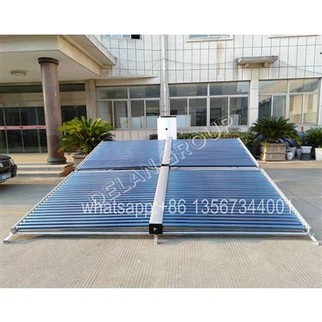
Having managed solar hot water system installation, troubleshooting, and performance optimization projects for more than a decade, I've encountered nearly every typical issue that homeowners and commercial operators face with solar water heaters. Many users mistakenly believe low heating efficiency, insufficient hot water, or frequent system faults stem from poor equipment quality. But from hundreds of field cases, I can confidently say that over 70% of solar hot water heater performance problems come from improper installation, neglected routine maintenance, unreasonable system matching, and incorrect daily operation.
Most online tutorials only list superficial faults without providing practical, engineer-verified solutions or actionable optimization methods. In this article, I will break down the most common solar hot water heater problems, analyze their real root causes based on on-site experience, and share targeted ways to improve solar water heater heating performance for both residential and commercial solar thermal systems. Whether you own a passive or active solar hot water system, these practical fixes can instantly boost heating efficiency, stabilize hot water supply, and extend your system's service life. As the technical team behind DELAN Technology Co., Ltd., we focus on solving real user pain points rather than simply promoting products.
1. Low Heating Efficiency & Insufficient Hot Water
This is the top complaint I receive from users year-round: the solar water heater works fine on sunny days but fails to produce enough hot water in winter, cloudy weather, or early morning and evening. Many users think their solar thermal collector quality is poor, but the actual causes are far more diverse.
Real Root Causes
First, long-term dust, bird droppings, and fallen leaves cover the surface of vacuum tubes or flat-plate collectors, blocking solar absorption and greatly reducing solar water heating efficiency. Second, unreasonable installation angles or building/vegetation shading lead to insufficient effective lighting time. Third, aging pipeline insulation layers cause serious heat loss during water circulation, even if the collector heats water normally. For active systems, slow circulating pump operation or pipeline blockages also weaken overall heating capacity.
Practical Performance Improvement Solutions
Clean the solar collector surface every 3 to 6 months to remove dust and debris, ensuring maximum solar energy absorption. Adjust the collector installation angle according to local latitude to adapt to seasonal solar altitude changes. Replace aging heat-insulated pipelines and reinforce outdoor pipeline thermal protection in winter. For active solar hot water systems, regularly test circulating pump operating speed and clean pipeline internal scale to guarantee smooth water circulation.
2. Slow Water Heating & Long Waiting Time
Many residential users report that their solar water heaters take several hours to heat up, especially in autumn and winter. This problem is rarely a equipment failure but mostly a system matching and operational setting error accumulated over time.
Practical Performance Improvement Solutions
The most frequent problem is mismatched
Based on household hot water consumption, appropriately optimize the matching ratio of collector area and tank capacity to avoid overloading the heating system. Adjust the intelligent control parameters to reduce frequent automatic water replenishment during low-temperature periods. Conduct annual tank scale cleaning to restore heat conduction efficiency. For families with large hot water demand, we properly configure solar hot water auxiliary heating modules to assist heating in low-light conditions, balancing heating speed and energy saving effect.
3. Pipeline Leakage & Heat Loss Failure
Pipeline leakage and invisible heat loss are hidden killers of solar water heater performance. Many users ignore minor water seepage and damaged insulation, which gradually cause reduced water volume, unstable water temperature, and increased energy consumption.
Real Root Causes
Outdoor pipelines are exposed to wind, rain, and frost all year round, leading to aging and cracking of sealing rings and insulation cotton. Non-standard installation with unstable pipeline connections will cause seepage under high water pressure. In winter, uninsulated pipelines are prone to freezing and cracking, resulting in system shutdown and heating failure.
Practical Performance Improvement Solutions
Quarterly inspect all pipeline connections, brackets, and insulation layers, replacing aging sealing accessories and damaged insulation materials in a timely manner. Adopt high-temperature resistant and freeze-proof pipelines for outdoor layouts. For cold-region projects, add pipeline anti-freezing heating belts and sealed protection structures to avoid freezing damage. Standardize pipeline laying to reduce bending and dead water zones, minimizing operational failures.
4. Auxiliary Heating Fails to Start or Runs Frequently
Most modern solar water heaters rely on auxiliary heating to ensure 24-hour hot water supply. Abnormal operation of auxiliary heating modules is a key factor leading to unstable system performance and increased power consumption.
Real Root Causes
Incorrect temperature sensor calibration leads to inaccurate temperature detection, causing the auxiliary heater to fail to start on cold days or start frequently on sunny days. Aging auxiliary heating components and faulty intelligent controllers also cause unresponsive heating functions. Some users set unreasonable temperature upper and lower limits, resulting in frequent start-stop cycles and shortened service life.
Practical Performance Improvement Solutions
Regularly calibrate temperature sensors and clean sensor surface dust to ensure accurate temperature monitoring. Test the operating status of electric auxiliary heating modules before each winter to eliminate hidden faults. Optimize controller temperature setting parameters according to seasonal changes to avoid invalid frequent start-stop, ensuring stable heating while controlling energy consumption.
5. Passive Solar Water Heater Low Efficiency in Cold Weather
Passive solar water heaters are widely used in ordinary households due to their simple structure and low cost. However, poor cold resistance and low winter heating efficiency are common pain points for this type of system.
Real Root Causes
Passive systems rely entirely on natural water circulation without pump assistance. Low ambient temperature slows down water circulation speed, and poor tank insulation performance leads to rapid heat dissipation. Unoptimized installation orientation also results in insufficient solar radiation absorption in winter.
Practical Performance Improvement Solutions
Reinforce the overall insulation protection of the water tank and bottom structure to reduce passive heat loss. Adjust the system installation orientation to face direct sunlight and avoid shading. For households with long-term low-temperature usage demands, properly upgrade local circulation structures or add low-power auxiliary heating modules to significantly improve winter heating performance without excessive investment.
6. Commercial Solar Hot Water System Unstable Continuous Heating
For commercial solar hot water systems used in hotels, factories, and schools, the biggest problem is unstable continuous heating during peak water consumption periods, which affects normal business operation.
Real Root Causes
Unreasonable grouping of multi-group collector arrays, unbalanced pipeline water pressure, and mismatched tank capacity cannot support centralized peak water use. Long-term large-scale operation leads to overall scale accumulation and reduced system heat exchange efficiency. Lack of regular professional debugging causes inconsistent operating status of each sub-system.
Practical Performance Improvement Solutions
Redistribute collector grouping and optimize pipeline pressure balance design to ensure uniform heating of each water tank. Conduct systematic deep scale removal and heat exchange maintenance every year for commercial systems. Set peak period auxiliary heating linkage modes through intelligent management systems to guarantee stable hot water supply during high-demand periods. Arrange regular professional on-site debugging to maintain long-term efficient operation of the entire system.
Core Daily Maintenance Habits to Keep Peak Heating Performance
Based on our decade-long engineering maintenance experience, the best way to avoid solar water heater failures and performance degradation is standardized daily maintenance. Good maintenance habits can keep the system running at peak efficiency for 15–20 years and greatly reduce solar water heater maintenance cost.
First, keep collectors clean and unobstructed all year round to ensure maximum solar energy utilization. Second, avoid frequent overwatering and random parameter modification to prevent system operation disorder. Third, complete pre-winter anti-freezing inspection and pre-summer performance debugging to adapt to seasonal climate changes. Fourth, regularly check brackets, pipelines, and electrical components to eliminate hidden dangers in advance.
Professional System Optimization by DELAN Technology
At DELAN Technology Co., Ltd., our core advantage lies in field problem solving and performance optimization, not just equipment supply. We have accumulated a complete set of solar thermal system debugging and optimization schemes for household and commercial scenarios. For old systems with reduced efficiency, we provide targeted renovation solutions including collector cleaning, pipeline optimization, intelligent parameter debugging, anti-freezing upgrading, and auxiliary system matching adjustment.
For new projects, we customizeenergy-saving solar water heater solutions according to local climate, building conditions, and user water demand, avoiding congenital performance defects caused by unreasonable early design and system matching. Every optimization measure is based on practical project experience, ensuring stable heating performance and long-term energy-saving benefits.
Final Conclusion
Most common solar hot water heater problems are repairable and preventable. Low heating efficiency, slow temperature rise, heat loss, and unstable hot water supply are not inherent flaws of solar thermal equipment, but results from long-term neglected maintenance, unreasonable design matching, and non-standard installation and operation. Through targeted inspection, regular maintenance, and professional performance optimization, users can fully restore and even exceed the original heating capacity of the system, maximizing long-term energy-saving returns.
If your solar water heater has low heating efficiency, insufficient hot water, or frequent minor faults, or you need professional performance detection and customized optimization solutions, feel free to contact DELAN Technology Co., Ltd. Our senior engineering team will provide one-stop fault diagnosis, performance upgrading, and system optimization services.