A few months ago, I visited three customers in the same week.
The first family had just received another expensive electricity bill and wanted to replace their electric water heater.
The second customer had already decided to install a heat pump because they had been told it was the most energy-efficient option available.
The third customer had been using a solar heater system for nearly ten years. They weren't looking to replace it-they were building a second house and wanted to know whether they should install the same system again.
All three customers asked almost exactly the same question.
"Which system is actually the best investment?"
It sounds like a simple comparison, but after working on hot water projects for years, I've learned there isn't a universal answer.
A solar heater system, an electric water heater, and a heat pump water heater all have their strengths. The right choice depends less on the equipment itself and more on how the building uses hot water, the local climate, energy prices, and how long you expect to own the property.
If you're choosing based only on purchase price, you'll probably make the wrong decision.
If you're choosing based on lifetime operating cost, the answer becomes much clearer.
Initial Cost Is Only Part of the Story
Most buyers naturally look at the purchase price first.
An electric water heater is usually the least expensive to buy and install. Installation is simple, spare parts are widely available, and almost every contractor knows how to fit one.
A heat pump water heater generally costs more because it includes a refrigeration system, compressor, fan, controller, and additional installation requirements.
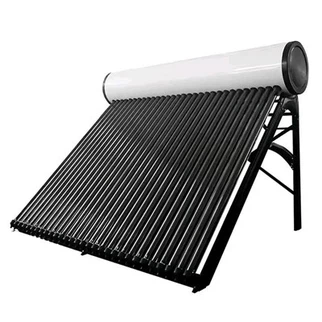
A solar heater system often has the highest initial investment because it includes collectors, a storage tank, mounting structure, insulated piping, and installation work.
At first glance, the electric water heater appears to be the obvious winner.
Unfortunately, the purchase price is usually the smallest part of the total cost over the life of the system.
Operating Cost Makes the Biggest Difference
One thing I've learned from customers is that people quickly forget what they paid for the equipment.
They never forget their monthly electricity bill.
An electric water heater converts electricity directly into heat. The technology is reliable, but it consumes electricity every time hot water is needed.
If electricity prices increase-which they have in many countries over the past few years-the operating cost increases immediately.
A heat pump water heater works differently.
Instead of generating heat directly, it transfers heat from the surrounding air. Under suitable conditions, it can produce three to four units of heat for every unit of electricity consumed.
That makes it much cheaper to operate than a traditional electric heater.
A solar heater system goes one step further.
Most of the energy comes directly from sunlight.
Electricity is only required for circulation pumps, controllers, or backup heating when solar energy is insufficient.
For households with high daily hot water demand, the long-term savings can be significant.
Performance Depends on Where You Live
This is something many comparison articles ignore.
Location changes everything.
I've seen customers in tropical climates achieve excellent performance from a solar hot water system throughout the entire year.
In colder regions with long winters, the system still performs well, but auxiliary heating may be required during extended cloudy periods.
A heat pump water heater also depends on climate.
It performs best when there is enough heat in the surrounding air. As outdoor temperatures fall, efficiency gradually decreases.
An electric water heater doesn't really care about weather conditions.
It produces hot water whether it's sunny, cloudy, or snowing.
The downside is that it always consumes electricity to do so.
Maintenance Requirements
People often assume a solar system requires constant maintenance.
That really hasn't matched my experience.
Most solar heater systems only require periodic inspection, collector cleaning where necessary, and checking insulation and valves.
There are very few moving parts.
Heat pumps are more complicated.
Since they contain compressors, refrigerant circuits, electronic controls, and fans, maintenance requirements are generally higher.
Electric water heaters are mechanically simple, although heating elements and thermostats may eventually require replacement, particularly in areas with hard water.
Which System Saves More Money?
This is where customers usually expect me to give a simple answer.
Instead, I normally ask another question.
How much hot water do you use every day?
For a family of two living in a small apartment with relatively low hot water demand, an electric water heater may actually make financial sense because the initial investment is low.
For a larger family with multiple bathrooms, daily showers, and continuous hot water demand, a solar heater system usually delivers the best long-term return.
For homes where roof installation isn't practical but electricity costs are high, a heat pump water heater can be an excellent compromise.
Every project is different.
That's why experienced system designers spend more time understanding the customer's requirements than recommending equipment.
Which System Would I Choose?
If I were building a house where I planned to live for many years, and I had good roof exposure to sunlight, I'd choose a solar heater system without much hesitation.
The higher installation cost would be recovered over time through lower energy bills, and the system would continue producing hot water for many years with relatively little maintenance.
If roof space were limited or the building didn't receive enough direct sunlight, I'd probably install a heat pump.
Only in situations where the budget was extremely limited or hot water demand was very low would I recommend relying entirely on an electric water heater.
That doesn't mean electric water heaters are bad products.
It simply means they're often the most expensive option to operate over the long term.
The Best Investment Isn't Always the Cheapest Equipment
One mistake I still see is customers comparing only equipment prices.
That's like buying the cheapest car without considering fuel consumption.
The real investment isn't what you pay on installation day.
It's what you'll continue paying every month for the next ten or fifteen years.
At DELAN Technology Co., Ltd., we've worked with homeowners, hotels, schools, and commercial buildings across different climates and applications. One lesson has remained consistent throughout those projects: the best-performing hot water system is rarely chosen because it has the lowest purchase price. It is chosen because it matches the customer's actual hot water demand, local weather conditions, available installation space, and long-term operating expectations. When those four factors are considered together, selecting the right system becomes much easier-and the investment delivers far greater value over its lifetime.