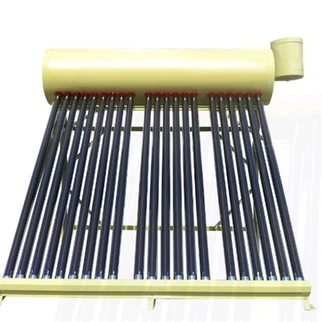
Choosing the right capacity for your solar water heater system is critical-too small and you'll run out of hot water during peak demand; too large and you'll waste money on unnecessary collectors and storage. The optimal capacity depends on three key factors: daily hot water consumption, peak usage patterns, and local climate conditions.
Start by calculating your household's or facility's daily hot water demand. For residential applications, the general rule is 40–50 liters per person per day for basic showering and kitchen use. A family of four typically requires 160–200 liters of storage capacity with 2–3 square meters of collector area. For commercial settings like hotels or restaurants, calculate based on actual fixtures: each shower head consumes approximately 60–80 liters per hour, while kitchen sinks use 20–30 liters per hour. Multiply by peak usage duration to determine total daily demand.
Peak usage timing matters as much as total volume. A hotel with 50 rooms may need 3,000–4,000 liters of storage to serve morning check-out rushes, even if total daily consumption is lower. Systems with insufficient storage capacity will deplete hot water before solar collectors can replenish it, forcing backup heating elements to compensate-defeating the purpose of solar investment.
Climate significantly impacts the required capacity. In sunny regions like southern China or the Middle East, collectors generate 60–70% of annual hot water needs, allowing slightly smaller storage tanks. In cloudy or northern climates, increase collector area by 20–30% and storage capacity by 15–25% to compensate for reduced solar yield during winter months. Always size systems for worst-case scenarios-typically the shortest day of the year in your location.
Avoid common sizing mistakes: don't base capacity solely on roof area available, don't ignore backup heating requirements for cloudy periods, and don't underestimate simultaneous usage spikes in multi-user facilities. Professional load calculations using tools like RETScreen or PVsyst provide more accurate sizing than rule-of-thumb estimates.
When in doubt, slightly oversize the storage tank rather than the collector array-excess storage provides thermal buffer during variable weather, while oversized collectors without adequate storage simply waste potential energy. Consult with experienced suppliers who can analyze your specific usage patterns and local conditions before finalizing your system design.