Why Choose Us
DELAN Technology is member of DELAN Group, which is established in 2007, being the top manufacturer introduced as domestic thermal supply system, started with solar water heater, heat pump, floor heating manifold system. We specialize in producing Solar Water Heating System, Solar Water Heater for Villa, Two Coils Solar Water Heater, Solar Collector, Compact Solar Water Heater, and other Flat Solar Water Heater.
Products Sell Well
Our products are exporting to Europe, South America, North America, Middle East, South Asia, Africa and other places.
Quick Response
Our commitment is to respond to your inquiries within 24 hours, ensuring that you receive the information and support you require in a timely manner.
Real Factory
Our company was founded in August 2003, being the top manufacturer introduced as thermal supply system in China, started with solar water heater, heat pump, floor heating manifold system.
Rich Experience
We rely on 16 years of work experience to produce high-quality, effective and reasonable heating systems for our customers.
Related Products

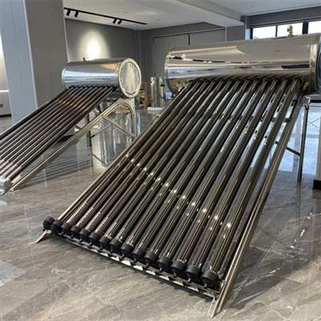
Unpressurized Solar Water Heater
Unpressurized solar water heaters is especially useful in areas where the water pressure is low, as they do not require high pressure to function effectively.

The key advantage is their mobility and ability to harness renewable energy, making them a sustainable and versatile option for heating water.

A solar hot water heater, also known as a solar thermal system, is a device that uses energy from the sun to heat water for households, commercial properties, or industrial facilities.

Non Pressure Solar Water Heater
Solar water heater from Delan Tech is popular worldwide, We professionally develop the non-pressure solar water heater is a type of solar water heating system that operates without the use of a pressure relief valve or a pressure tank.

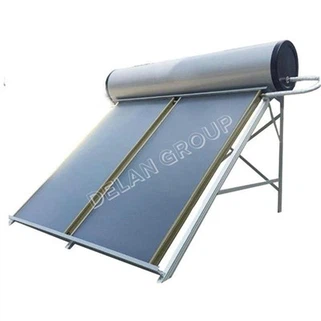
Flat solar water heaters for home have a range of advantages that make them a great investment. They are environmentally friendly, cost-effective, and require minimal maintenance. They are a great solution for anyone who wants to save money while protecting the environment.

By harnessing the power of the sun, they help reduce energy consumption and lower utility bills while providing a sustainable and environmentally friendly alternative to conventional water heating methods.

The solar water heater from Delan Tech is popular worldwide, the two-coil solar water heater is a type of solar water heating system that utilizes two separate coils to heat water using solar energy.

The system is built to withstand extreme weather conditions, making it suitable for use in almost any part of the world.

Solar collector and solar plate from Delan Tech is popular worldwide, Our solar collectors offer a sustainable, cost-effective, and environmentally friendly way to generate energy, making them a valuable asset in the transition to a cleaner and more sustainable future.
What is Flat Solar Water Heater
A flat plate solar water heater uses a large, flat area of black-painted metal to collect the heat, inside an insulated box with a glass cover. A solar water heater preheats the water so your regular water heater doesn't have to work as hard, saving on your energy bill. If you want to know the specifications and prices of Flat Solar Water Heater, please contact us!
Advantage of Flat Solar Water Heater
Reduced Carbon Footprint
At a time when countries are brainstorming innovations and making stringent efforts to cut their carbon footprints, installing flat plate solar collectors is a viable way to contribute immensely to this cause. Flat plate solar panels do not use fossil fuels or non-renewable energy sources to generate heat. Rather, their approaches are environmentally friendly. They utilise renewable solar radiation, thereby minimising your carbon footprint and making the environment more inhabitable in the long run.
Constant Hot Water
With a flat plate solar water heater, you will have hot water available to you year-round. It gets regular and a good amount of sunlight, which flat solar panels need to generate heat and keep the water in your home warm and available for use. If you install the flat plate solar water heater in your building, you will be able to get hot water whenever you need it.
Good Positioning
With the flat surface of this solar water heater, no special positioning is required during installation to ensure it absorbs solar radiation. The panels are fixed in slant positioning, enabling the flat surface area to receive direct sunlight without tracking the sun.
Low Maintenance Costs
Unlike water heaters that utilise fossil fuels to generate heat, flat plate solar water heaters require comparatively low maintenance costs. This feature is among those that make this equipment a cost-effective way to generate electricity. Be it an industrial water heater or a commercial water heater, they are cheap to maintain.
Cheap
Some government initiatives have been put in place to subsidise the cost of this solar water heater, allowing many households to have one.
Long Lifespan
This solar water heater has a long operating life. It can collect heat for your buildings' water system for many years. It has durable body components, which, combined with the high maintenance rate, ensures that it operates for as long as possible.
Less Space
Unlike photovoltaic solar panels, flat plate solar panels take up less space. This makes them easy to install on any flat surface in your home exposed to sunlight. Because they are not space-intensive, they leave room for any other installations you may need.
Increased Efficiency
Flat solar panels are effective solar water heaters because they absorb direct, reflected, or diffused solar radiation to generate heat energy. About 80 per cent of the sun's radiation is absorbed and converted into energy to obtain hot water.
Zero Overheating Issues
Flat plate solar water heaters do not overheat during summer. They come with a modulating collector that ensures that they do not overheat and develop maintenance issues. This means that during the long summer days, you can generate heat energy without trouble.
Corrosion Resistant
If you are looking for solar panels that are corrosion resistant, flat plate solar water heaters are a good option.
Reduced Energy Bills
Flat solar panels do not consume fossil fuels or electricity to generate energy to heat water. With direct sunlight, flat solar panels generate heat energy and hugely reduce your energy bills.
How to Maintain Flat Solar Water Heater
Over time, leaves and other organic matter can build up around the base of the heater, blocking sunlight and causing the unit to work less efficiently. In addition, debris can clog the system's pipes and valves, preventing proper circulation. To maintain peak performance, sweep away any leaves or other debris that have gathered around the base of your solar water heater. Once a month, inspect the unit for any signs of damage or leaks and contact a professional if you notice any problems.
Although solar water heaters are designed for long-term operation, they will eventually need to be serviced by a qualified technician. Depending on the type of system you have, you may need to have it serviced as often as every three to five years. Remember that prevention is the key to maintaining any type of mechanical system, including a solar water heater. During a service call, the technician will check all of the system's parts for wear and tear. They will also clean the unit, flush the pipes, and refill the antifreeze solution if necessary. By having your solar water heater serviced regularly, you can ensure that it continues to operate at peak efficiency.
Solar water heaters rely on a circulating fluid to transfer heat from the sun to the water inside the tank. Over time, this fluid can become depleted, causing the system to lose efficiency. To keep your solar water heater running at its best, check the fluid levels every six months or so. If you notice a drop in fluid levels, top it off with distilled water. If you have an automatic solar water heater, you may not need to do this step as often. Check your owner's manual for more information on how to maintain your specific model.
The solar panels are the most important part of the system, so it's important to keep them clean and free of debris. Inspect the panels at least once a month to make sure they're in good condition. If you live in an area with a lot of dust or pollen, you may need to clean the panels more often. You can use a soft brush or cloth to gently remove any build-up on the panels. Be careful not to scratch the surface. Keep an eye out for animals nesting on or near the solar panels. Birds, squirrels, and other critters can damage the panels or the system itself. If you see any animals around the panels, shoo them away and call an exterminator if necessary.
The storage tank is where the solar-heated water is stored. It's important to check the tank regularly to make sure there's no rust or corrosion. You should also flush the tank every few months to remove any sediment that may have accumulated. To flush the tank, turn off the power to the system and drain the water into a bucket. Once the tank is empty, refill it with fresh water and turn the power back on.
Evacuated Tube Collector V/S Flat Plate Collector
Both Evacuated Tube Collectors and Flat Plate Collectors offer a unique set of benefits. In this section, we'll compare the two based on the key parameters.
When it comes to the cost of purchase, evacuated tube collectors are slightly more expensive as compared to the flat plate collectors. This is because flat plate collectors are easier to manufacture and simpler to design. On the other hand, evacuated tube collectors have a lower cost per BTU (British Thermal Unit). BTU means the amount of energy required to raise the temperature of 1 pound of water by 1 degree Fahrenheit.
Evacuated tube collectors are more efficient in retaining heat, thus they perform well even in low temperatures. On the other hand, flat plate collectors may not be able to supply hot water in winters.
Evacuated tube collectors heat water faster and can provide you with hot water at up to 200 degrees Fahrenheit. Thus, their heating efficiency is excellent. That means they are suitable for commercial applications that require hot water in large quantities.
Flat plate collectors may take longer time to heat water and can supply hot water at up to 140 degrees Fahrenheit. Thus, they are suitable for homes that do not require large quantities of hot water.
Both evacuated tube collectors and flat plate collectors are expected to last for about ten to fifteen years.
As flat plate collectors are made up of copper pipes, they are more vulnerable to corrosion. The condensation of water on the inside of the glazed plate and repeated drips on the solar absorber can affect the durability of the collector. It can also lead to growth of mould. However, in most cases, flat plate collectors can easily be repaired.
When it comes to evacuated tube collectors, their heating efficiency depends on the vacuum. In case an evacuated tube collector loses its vacuum, the glass tubes will need to be replaced.
As evacuated tubes are cylindrical in shape, they receive the sun rays at 90 degrees throughout the day. Thus, their absorption is optimum, no matter the way in which they are installed. Due to their design, the flat plate collectors receive optimum sunlight only during midday. Thus, they need to be installed in a slanting position at a specific angle.now.
Component of Flat Solar Water Heater
Collector Plate
The collector plate is a flat, dark-colored surface that absorbs sunlight and converts it into heat. This plate is usually made of materials with good thermal conductivity, such as copper or aluminum. It is designed to maximize the absorption of solar radiation.
Absorber
The absorber is a layer on the collector plate that absorbs sunlight and converts it into heat. It is often coated with a selective surface that enhances its ability to absorb and retain heat.
Transparent Cover
A transparent cover, typically made of glass or plastic, is placed over the collector plate to allow sunlight to enter while minimizing heat loss. The cover creates a greenhouse effect, trapping the absorbed solar energy and preventing it from escaping back into the atmosphere.
Insulation
To minimize heat loss, the sides and back of the solar water heater are insulated. Common insulation materials include fiberglass or foam.
Plumbing
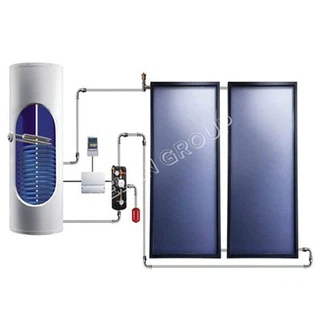
The plumbing of a solar water heater system is divided into two parts. The glycol system which circulates through the roof top collectors, and the potable water system which includes the solar hot water storage tank, the home water heater, and the safety valves and expansion tank.
The glycol loop consists of two insulated pipes running to the roof to allow a pump to circulate the fluid and bring the heat to the water storage tank. A heat exchanger separates the glycol loop from the potable water in the storage tank.
The plumbing in the "tank room" will contain a number of devices, a pump or pumps, temperature gauges, a pressure gauge, a flow meter, a controller, and ports to insert and check the glycol. On the potable side, the anti-scald valve and another temperature gauge will be plumbed in.
Finding a location for a hot water storage tank can be challenging. Ideally, a location next to your hot water heater is best, however, a close location, even if through a wall in another room will work. Some homeowners replace their old tank type hot water heater with a wall mounted tankless water heater, and then use the old water heater space for the solar water heater tank.
Controller
The controller in a solar hot water system is an electronic device that monitors the temperature of the water in the storage tank and controls the pump, as well as other components of the system. The controller is typically located near the storage tank and is connected to the solar collector, the storage tank, the pump, and the hot water pipes in the home or building by a series of wires and plumbing connections. The controller is an important component of the solar hot water system, as it ensures that the water in the storage tank is always at the desired temperature and that the system is operating efficiently.
Frequently Asked Questions
Q: Which is better evacuated tube or flat panel solar hot water?
Q: Which type of solar water heater is best?
Q: What temperature level is possible in a flat type solar water heater?
Q: What are the advantages of flat plate solar panels?
Q: What are the two types of solar water heaters?
Solar water heating systems include storage tanks and solar collectors. There are two types of solar water heating systems: active, which have circulating pumps and controls, and passive, which don't.
Q: How long do solar water heaters last?
Q: Can solar hot water get too hot?
Q: Can solar water heaters get too hot?
Q: How long does it take for a solar water heater to heat up?
Q: What is the efficiency of flat plate solar heater?
Q: What is the efficiency of flat plate solar?
Q: Which solar water heater Cannot be used to get hot water?
Q: What is the alternative to solar hot water?
Q: Which is better flat plate or vacuum tube solar collectors?
Q: Are solar water heaters worth it?
Q: Why is my solar hot water system so loud?
Hot Tags: flat solar water heater, China flat solar water heater manufacturers, suppliers, factory, low pressure solar water heater for swimming pools, solar water heater for low pressure in agricultural areas, low pressure solar water heater for multi family homes, solar water heater for low pressure in warehouses, solar water heater for low pressure in schools, solar water heater for low pressure in forestry areas