


Solar hot water projects can be a fantastic way for hotels to reduce their energy consumption and carbon footprint while still meeting their guests' needs for hot water. Implementing such a project can bring several benefits, both environmentally and economically. If you need design of solar water heating system in hotel, Delan Tech is your good choice!


Product Specification
|
Product name |
Heat pipe solar collector |
|
Model |
SNSC10 |
|
Inner manifold material |
Stainless steel 304 food grade |
|
Outer shell material |
Aluminum alloy |
|
Insulation layer |
Rock wool |
|
structure |
Aluminum alloy, 10/20/30/45 degrees |
|
Vacuum tube |
58x1800mm three layers |
|
Heat pipe |
14*0.8mm |
|
Tube distance |
7.5cm |
|
certificate |
CE, EN12975 |
Trade Term
|
warranty |
5 years quality warranty |
|
Delivery time |
10 days after receiving your down payment( 5 containers) |
|
package |
Exporting cartons |
|
Payment term |
T/T, L/C |
|
Customized service |
Free to put logo on tank, carton and tubes,OEM tank design |
|
Supply ability |
500 sets /day |
Note:
A)The above is specification for popular model in market, we can produce according to your requirements exactly.
8)Other tube quantity is available
Product Details


Product Advantage
Big capacity solar hot water systems professionally developed by Delan Tech utilize renewable energy from the sun, which means they produce clean and sustainable heat. By installing solar collectors on the hotel's roof or other suitable locations, you can harness the sun's energy to heat water for showers, laundry, and other purposes. This reduces the hotel's dependence on fossil fuels and lowers its greenhouse gas emissions.
Why Choose Us
1) Professional and experienced technical team.
2) More than 16 years manufacturing experience.
3) 24 hours online technical support and installation guide.
4) Free consulting before purchase.


Application

Our products are popular in many market with strong quality and competitive price, offering green energy, save life cost is our aim, thanks for clients' feedback with installed pictures.
This solar hot water project is suitable to hotel, office building, schools, industrial area, poultry farms, swimming pool, etc , where need big quantity of hot water consumption. 1000 liters to 50000liters or hundreds tons , following are some pictures of our solar hot water projects.

Container Loading Pictures

Hot Tags: solar hot water for room heating, China solar hot water for room heating manufacturers, suppliers, factory
DELAN Technology is member of DELAN Group, which is established in 2007, being the top manufacturer introduced as domestic thermal supply system, started with solar water heater, heat pump, floor heating manifold system. We specialize in producing Solar Water Heating System, Solar Water Heater for Villa, Two Coils Solar Water Heater, Solar Collector, Compact Solar Water Heater, and other Flat Solar Water Heater.
Products Sell Well
Our products are exporting to Europe, South America, North America, Middle East, South Asia, Africa and other places.
Quick Response
Our commitment is to respond to your inquiries within 24 hours, ensuring that you receive the information and support you require in a timely manner.
Real Factory
Our company was founded in August 2003, being the top manufacturer introduced as thermal supply system in China, started with solar water heater, heat pump, floor heating manifold system.
Rich Experience
We rely on 16 years of work experience to produce high-quality, effective and reasonable heating systems for our customers.
Related Products

It offers the benefits of reduced energy consumption, lower utility bills, and a more sustainable and environmentally friendly alternative to traditional water heating methods.

Solar Hot Water for Room Heating
This solar hot water project is suitable to hotel, office building, schools, industrial area, poultry farms, swimming pool, etc , where need big quantity of hot water consumption.

The heat pipe solar water heaters from Delan Tech is popular worldwide, offer efficient, reliable, and cost-effective solutions for heating water using renewable energy.
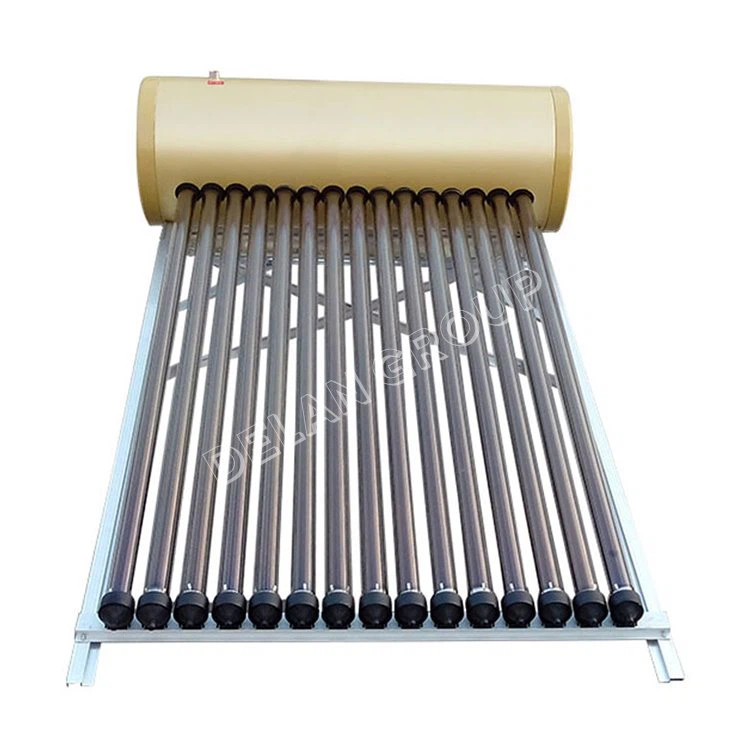
Integrated Pressurized Solar Water Heater
The heat pipe solar water heaters from Delan Tech is popular worldwide, Especially our professionally developed An integrated pressurized solar water heater is a type of solar water heating system that combines both the solar collector and the storage tank in one unit.

Integrated Pressure Solar Water Heater with Heat Pipe
The Pressurized Heat Pipe Solar Water Heaters from Delan Tech is popular worldwide, An integrated pressure solar water heater with heat pipes is a type of solar water heating system that utilizes heat pipes to transfer heat efficiently from the solar collector to the water storage tank.

Solar Master Integrative Pressurized System
This kind of solar water heater is also durable and reliable. The tank of Solar Master integrative pressurized system is made of high-quality stainless steel and is well insulated, which ensures that the water remains hot for an extended period.

Pressurized Solar Water Heaters
The Solar collector and solar plate from Delan Tech is popular worldwide, especially our Pressurized Solar Water Heaters are reliable and efficient solution for harnessing solar energy to heat water.

The effectiveness of a solar water heating system depends on factors such as location, system design, and usage patterns. Consulting with a professional installer can help determine the suitability and potential benefits specific to your situation.

He solar water heater from Delan Tech is popular worldwide, the two-coil solar water heater is a type of solar water heating system that utilizes two separate coils to heat water using solar energy.
What is Integrated Solar Water Heater
Conversion of solar energy to heat energy is a cost effective, sustainable and an efficient technology to heat water. Solar integrated collector-storage type of water heaters (ICSSWH) is a water heating device which alchemizes solar radiation directly into heat so that it is used for water heating. If you want to know the specifications and prices of Solar Water Heater, please contact us!
Advantage of Integrated Solar Water Heater
Solar water heaters have large, insulated storage tanks. There is a main tank which stores the water. This is followed by a layer of Insulation, usually PUF or Rockwool, and then a final layer of a PPGI/SS/Aluminium outer cladding to cover the insulation. These layers of insulation are often 50-75mm thick, thick enough to hold the heat within the water for 3-4 days. Overnight heat losses are minor, making them ideal for regions with continuous periods of heavy rainfall.
Traditionally, solar water heating systems were made of Mild Steel with no coating. This led to these systems corroding within 3-4 years of use.
With advances in technology, solar water heating systems, these days, are largely made of Galvanised Iron (GI) or Stainless Steel (SS). The steel is covered with a corrosion protection coating such as enamel, epoxy, powder coating, etc to prevent salts, chlorides, etc from corroding the metal.
A family of four may need a much larger solar water heating system than a family of two. Similarly, if you have guests coming over often you may need to build some emergency capacity. If you are used to bathing twice in a day, this needs to be budgeted. Likewise, if your solar hot water system is to supply three bathrooms instead of one, the plumbing heat losses may be higher and must be compensated for.
Considering these needs, solar water heaters come in variable sizes – 100,125,150,200,250,300,400 and 500LPD are the common ones. If you are not sure what size of solar water heater you would need for your house, you can use this handy calculator which we have built for you.
Solar water heaters combine the world of high pressure with instantaneous hot water to give the ideal bathing experience for home owners. Some solar water heating systems are designed to operate at even upto 10 bar pressures and are often sold with booster pumps.
The company from whom you purchased the water heater can install the system on your terrace. Your plumber can then complete the installation of the system by integrating it with your home's plumbing lines and you will have seamless delivery of hot water through your shower heads.
Component Of Integrated Solar Water Heater
COLLECTORS
In the Northwest, solar water heaters typically fall into two basic categories: Flat plate collector systems and evacuated tube systems.
Flat Plate Collector Systems have a large, flat surface area (absorber) to maximize exposure to the sun, and has small tubes bonded to it. Fluid runs through the tubes, collecting the heat from the absorber. The sides and bottom of the collector are well-insulated, and glass on top completes the insulation. Water is pumped up through the collector when there is enough sunlight to heat the coils. When conditions are not right for heating water, the pumps turn off and the water drains back to a reservoir to prevent freezing and overheating. Several factors make the collector as efficient as possible. One is the coating on the absorber, which is specially formulated to both absorb as much heat as possible, and to radiate back out as little heat as possible. Another is the glass, which is high-iron and specially coated to let as much light energy as possible through and also prevent as much heat loss as possible.
Evacuated Tubes Systems has a long, skinny absorber that is inside a glass tube. The tube has the air evacuated out of it, which makes it highly insulated-not too different from a thermos used to keep drinks hot. These systems also rely on pumps to move the fluid. The advantage is reduced heat loss from the collector to the surrounding air. This would be important in a climate with cold daytime temperatures where solar heated water is being used for space heating. Evacuated tube systems are generally more expensive than flat plate collectors.
PLUMBING
The plumbing of a solar water heater system is divided into two parts. The glycol system which circulates through the roof top collectors, and the potable water system which includes the solar hot water storage tank, the home water heater, and the safety valves and expansion tank.
The glycol loop consists of two insulated pipes running to the roof to allow a pump to circulate the fluid and bring the heat to the water storage tank. A heat exchanger separates the glycol loop from the potable water in the storage tank.
The plumbing in the "tank room" will contain a number of devices, a pump or pumps, temperature gauges, a pressure gauge, a flow meter, a controller, and ports to insert and check the glycol. On the potable side, the anti-scald valve and another temperature gauge will be plumbed in Finding a location for a hot water storage tank can be challenging. Ideally, a location next to your hot water heater is best, however, a close location, even if through a wall in another room will work. Some homeowners replace their old tank type hot water heater with a wall mounted tankless water heater, and then use the old water heater space for the solar water heater tank.
HEAT EXCHANGER
The heat exchanger in a solar hot water system is a device that transfers heat from the solar collector to the water in the storage tank. It typically consists of a series of pipes or tubes that run between the solar collector and the storage tank. As the water in the solar collector is heated, it flows through the heat exchanger and transfers its heat to the water in the storage tank, which is then used for hot water.
PUMP
The pump in a solar hot water system is a device that circulates the water between the solar collector and the storage tank. The pump is typically controlled by a controller, which monitors the temperature of the water in the storage tank and turns the pump on or off as needed to maintain the desired water temperature. The pump is an important component of the solar hot water system, as it ensures that the water in the solar collector is always circulating and that the heat is being transferred to the storage tank.
How to Maintain Integrated Solar Water Heater
Regular Inspection
Conduct visual inspections of your solar water heater system at least once every six months. Check for any signs of damage, leaks, or corrosion. Inspect the pipes, connections, valves, and collectors for any issues.
Cleaning the Collectors
Keep the solar collectors clean and free from debris, dust, or leaves. Dirty collectors can reduce the efficiency of the system. Use a soft brush or cloth to clean the surface of the collectors. Avoid using abrasive materials that could damage the surface.
Checking for Leaks
Inspect all the pipes, valves, and connections for leaks. Look for any water dripping or pooling around the system. If you find any leaks, have them repaired immediately to prevent further damage.
Flushing the System
Over time, mineral deposits and sediment can accumulate in the solar collector or storage tank. It's recommended to flush the system annually or as per the manufacturer's guidelines to remove any buildup. Flushing the system will improve its efficiency and prevent clogs.
Inspecting the Insulation
Check the insulation around the pipes and storage tank. Ensure that the insulation is intact and properly covering the components. Damaged or deteriorated insulation should be replaced to prevent heat loss.
Verifying Pump Operation
If your solar water heater has a circulation pump, make sure it is functioning correctly. Test the pump periodically to ensure it is running smoothly and effectively circulating the water.
Checking the Temperature and Pressure Relief Valve
The temperature and pressure relief valve is a critical safety feature of the solar water heater. Inspect the valve to ensure it is not leaking and is operating properly. If you notice any issues, contact a professional to repair or replace the valve.
Monitoring System Performance
Keep track of the system's performance, such as the water temperature and overall efficiency. If you notice a significant drop in performance or inconsistent hot water supply, it may indicate a problem that requires professional attention.
Following Manufacturer's Guidelines
Always refer to the manufacturer's instructions and guidelines for specific maintenance recommendations. Different solar water heater models may have unique requirements, so it's important to follow their guidelines for optimal maintenance.
Professional Servicing
Consider scheduling periodic professional servicing of your solar water heater. An experienced technician can conduct a thorough inspection, perform necessary maintenance tasks, and ensure the system is operating efficiently.
How to Does a Integrated Solar Water Heater Work
Solar collectors are mounted to the roof, usually oriented toward the south, and tilted to catch the maximum amount of solar energy during the day.
Pipes making up the solar loop connect the collector to the solar tank, and a pump moves the fluid in a loop. The collector warms the fluid, it is pumped to the solar tank where it heats the water, and then the cooler fluid flows back up to the collector to be reheated.
The solar storage tank contains the heating heat exchanger and the tap water. For an indirect system like this one, a heat transfer fluid is used that does not mix with your tap water. The heat from the solar loop is transferred to the water through the heat exchanger. A cold water line connects to the solar tank to refill it as you use hot water.
The water in the solar tank heated by the sun flows into the inlet of the backup water heater as you use hot water. If needed, the backup water heater boosts the water temperature up to the setpoint. But if the water from the solar tank is already warm enough, the backup does not turn on at all. Backup water heaters are there to make sure you always have enough hot water, no matter the weather. (Note: Some solar water heaters may not have separate solar tanks and backup water heaters. These combine the two into a single tank to save space.) Any kind of backup water heater can be used – gas or electric, tank-type, or tankless.
The whole system is linked by a controller that monitors the temperature of the water in your solar tank and the rate you are using hot water. Most solar water heaters use smart controllers that allow the water in the solar tank to heat well above the setpoint of your water heater. This allows solar water heaters to store as much solar energy as possible during the day to reduce or eliminate the need for the backup heater to run. For example, if your hot water setpoint is 120°F, a solar tank controller may allow the water in the solar tank to heat up to as much as 160°F (depending on the tank) during the day. Once it hits the maximum temperature, the pump turns off. A mixing valve then adjusts the temperature to a safe setpoint as it moves into your plumbing system to avoid scalding risks.
Frequently Asked Questions
Q: Are solar hot water heaters worth it?
Q: How effective is solar water heating?
Q: Is solar water heater cost effective?
Q: What is the lifespan of a solar water heater?
Q: Do solar water heaters need a pump?
Q: What are the pros and cons of solar water heaters?
Q: Can I drink water from solar water heater?
Q: Can you boil water with a solar water heater?
Q: How many solar panels do I need to run a hot water heater?
Q: Which water heater is best solar or electric?
Q: Is solar water heater better than electric?
Q: How to choose a solar water heater?
Q: Which type of solar water heater is best?
Q: Do solar water heaters freeze?
Q: Which is better solar water heater or heat pump?
Hot Tags: 3000 liters solar hot water system, China 3000 liters solar hot water system manufacturers, suppliers, factory, commercial solar water system safety, commercial solar water system job, commercial solar water system regulations, commercial solar water system installer, commercial solar water system challenges, commercial solar water system technical support


